
How Catering Delivery Windows Work for Offices
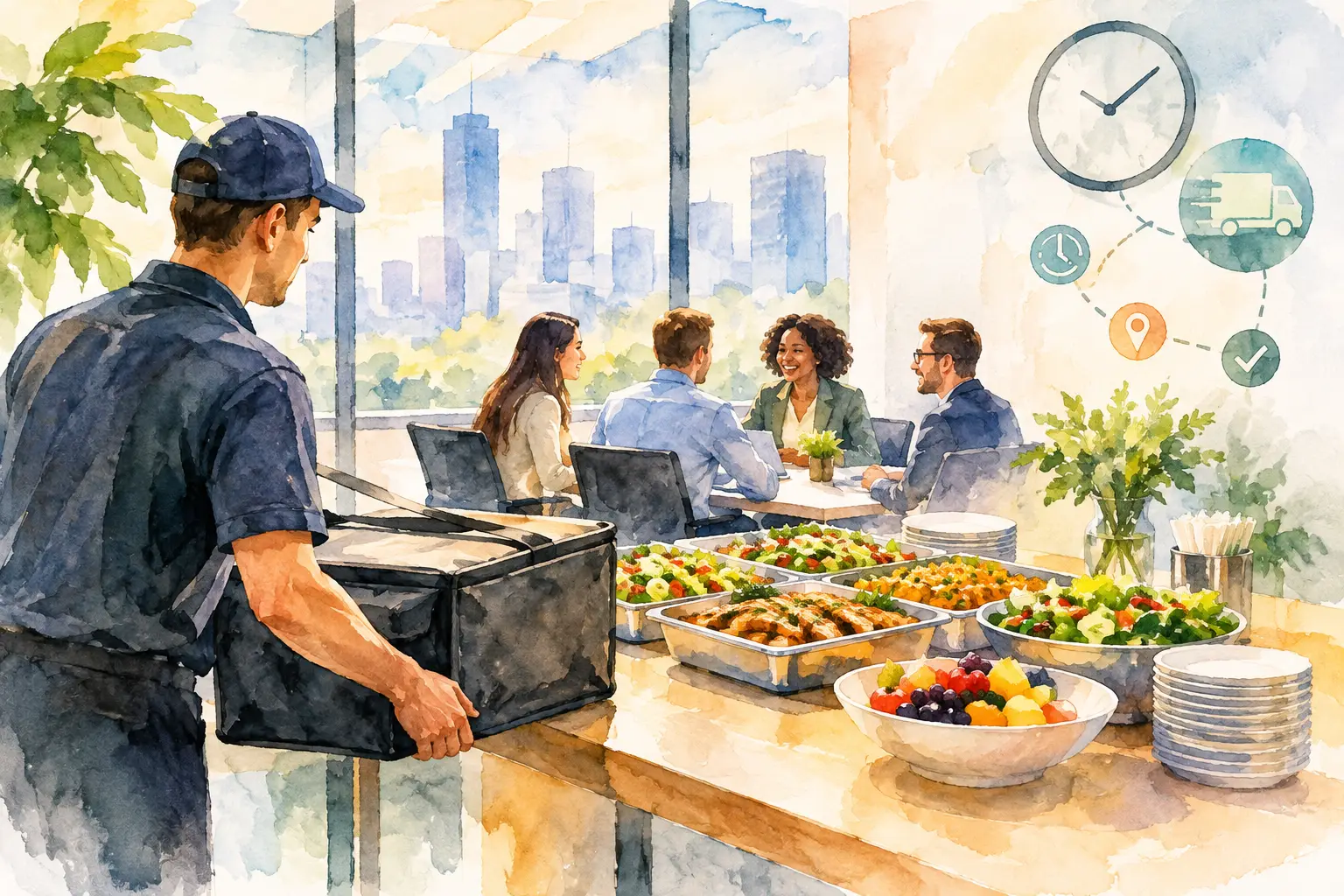
A team lunch scheduled for 12.30pm cannot turn up at 11.45am and sit cooling in reception. Equally, it cannot arrive after the meeting has started. That is why understanding how catering delivery windows work matters when you are feeding a busy office, hosting clients or organising an all-hands event.
A delivery window is more than a broad estimate. It is the agreed period in which your food will arrive, allowing caterers, Makers and office teams to plan around preparation, traffic, building access and serving time. Get it right and lunch feels effortless: great food, every time, arriving when people are ready to enjoy it.
What is a catering delivery window?
A catering delivery window is a defined arrival period rather than a single, guaranteed minute. For example, an order needed for a 1pm lunch might have a delivery window of 12.30pm to 12.45pm. This gives the delivery team enough practical flexibility to manage London roads and multiple stops, while giving your office a clear expectation of when to be ready.
The length of that window depends on the order. A small boxed-lunch order for a familiar office may need a tighter window than a large buffet for 150 people, especially if it involves several food stations, hot dishes or a complicated loading-bay booking. The aim is not vague timing. It is reliable timing that accounts for the real work required to get food from a working kitchen to your table in great condition.
For workplace teams, the distinction is useful. A requested serving time is when you want people eating. A delivery window is when the food needs to reach the building so it can be checked, set out and served properly.
How catering delivery windows work in practice
Every successful delivery starts before a driver leaves the kitchen. The catering team first considers the menu, quantity, delivery address and requested serving time. Fresh salads, filled wraps and pastries may simply need to be unpacked and arranged. Hot buffets, meanwhile, may require insulated transport, careful placement and a few extra minutes to set up safely.
Your location matters too. A ground-floor office with a reception desk and straightforward lift access is different from a city-centre building with timed loading slots, security sign-in and a meeting room on the 18th floor. Neither is a problem, but the details affect the sensible arrival time.
A good caterer will then assign a realistic delivery window, rather than promising an exact minute that leaves no room for a road closure, a busy concierge desk or an earlier event running over at the venue. The food is prepared to suit that window, packed for the journey and dispatched with enough time to protect quality.
This is particularly important with maker-led catering. Food prepared by independent kitchens has character, care and proper flavour - not generic menus or bland food from a soulless central kitchen. It also needs logistics that respect the work behind it. Delivery planning makes sure warm dishes remain warm, crisp elements stay crisp and beautifully arranged platters still look the part when they reach your office.
Delivery time is not always serving time
Most orders benefit from a little breathing room between arrival and the first plate being served. For a simple team breakfast, 10 to 15 minutes may be plenty. For a client lunch, sharing spread or event buffet, allow longer so the organiser can check the order, arrange the table and make the room welcoming before guests arrive.
If lunch begins at 1pm, asking for delivery between 12.30pm and 12.45pm is often more practical than requesting a 1pm arrival. You avoid the awkward moment where hungry colleagues are waiting while trays are still coming through security.
There are exceptions. If your office has limited fridge space, no suitable holding area or a particularly small reception, an earlier delivery may create more problems than it solves. In that case, tell the caterer. The best delivery plan is based on how your workplace actually operates, not a one-size-fits-all rule.
What affects the size of a delivery window?
A delivery window is shaped by a mix of food, location and event requirements. Knowing these factors in advance helps you choose a delivery time with confidence and gives your caterer the information needed to plan well.
The most common considerations are:
- Order size and format: A breakfast drop for 12 people is quicker to unload than a multi-course lunch for 80. Individually boxed meals are usually faster to distribute, while sharing platters and buffets need space for a proper set-up.
- Hot or cold food: Hot food often has a narrower ideal serving period, so its preparation and route need closer coordination. Cold lunches can sometimes arrive slightly earlier, provided there is appropriate storage.
- Building access: Security procedures, reception policies, lifts, stairs, parking restrictions and loading-bay bookings all influence timing. A driver who cannot enter the building cannot complete a delivery on time.
- London traffic and route planning: Congestion, roadworks and local restrictions are part of city catering. A defined window gives delivery teams room to manage the unexpected without compromising your event.
- Event complexity: Branded set-ups, crockery, multiple dietary stations, plated dishes or food that needs arranging on site all require more than a quick handover at reception.
Dietary requirements also deserve attention. When meals are labelled individually or allergens need to be kept clearly separated, a few extra minutes on arrival can make a meaningful difference. That is not unnecessary fuss. It is part of looking after every guest properly.
How to choose the right window for your office
Start with the moment food will actually be eaten, then work backwards. Consider whether the room needs dressing, whether someone will be available to receive the delivery and whether your team needs time to move from desks to the dining space.
For an informal office lunch, a 15 to 30-minute buffer is usually sensible. For a board meeting or client event, 30 to 45 minutes gives you time to present food neatly and resolve any last-minute room changes without pressure. Larger events may need an even earlier arrival, particularly where several tables, serving equipment or staged courses are involved.
It also helps to nominate one named contact. They should know the delivery window, have their phone available and understand where the driver should go. A clear contact prevents a common problem: food has arrived at the building, but reception has no idea which floor, room or organiser it belongs to.
When placing an order, share practical instructions early. Include the company name, entrance, postcode, floor, lift or stair information, reception process and any loading restrictions. If the building requires drivers to book in, make that clear before the day of delivery. Small details can save a lot of lunchtime chasing.
With &Dine, that operational clarity sits alongside choice from independent food Makers, whether you are arranging a flexible ad-hoc lunch, recurring workplace meals or a one-off event. The food should feel memorable. The ordering and delivery process should feel organised.
What to do if your plans change
Workplaces move quickly. A meeting may be brought forward, headcount can rise, or a client may decide to stay for lunch. Contact your caterer as soon as you know something has changed. Earlier notice gives the kitchen and delivery team the best chance of adjusting preparation, portions or timing.
Changes close to the delivery date are not always possible, especially for hot food or large orders already being prepared. That is a trade-off worth understanding: the more bespoke the menu and event set-up, the more lead time is usually needed to change it without affecting quality.
If your serving time moves later, ask whether the food can be held safely and still be served at its best. Some dishes travel and hold well; others are deliberately designed to be enjoyed soon after arrival. A good caterer will be honest about that rather than letting a beautiful meal lose its edge in a corridor.
A delivery window is part of the guest experience
It is easy to think of delivery timing as an administrative detail. In reality, it shapes the whole experience. When breakfast is ready before the first workshop session, lunch appears just as the team breaks and client catering is set before guests walk in, the office feels considered and hospitable.
The best approach is simple: choose a window that gives food enough time to arrive and be presented well, while keeping it close enough to serving time to taste its best. Share the building details, appoint a contact and leave a little room for real city logistics. Then your guests can focus on the food, the conversation and the reason they came together in the first place.